






When you vape CBD for anxiety, research shows you’ll likely experience mild, self-limiting side effects like drowsiness, fatigue, and dizziness. However, vaping creates unique risks, studies indicate CBD aerosols cause greater lung tissue damage and oxidative stress than nicotine vaping. Higher doses increase your chances of sedation and appetite changes, while unregulated products may contain harmful undisclosed ingredients. Understanding CBD vape pen side effects for anxiety and how dosage and product quality affect your specific response can help you minimize these risks.
What Side Effects Can CBD Vape Pens Cause?

When you inhale CBD through a vape pen, you’re exposing your body to a range of potential side effects that differ markedly from oral CBD consumption.
Cannabinoid inhalation delivers CBD rapidly to your bloodstream, intensifying short-term effects. You may experience fatigue, drowsiness, and cognitive impairment, including reduced motor coordination. Neurological effects extend to potential memory issues and, in some cases, seizures.
Inhaled CBD reaches your bloodstream fast, potentially causing drowsiness, impaired coordination, and neurological effects you should know about.
Your lungs face significant risks. Research shows CBD aerosols cause greater focal lesions and tissue damage compared to nicotine vaping. You’ll experience increased oxidative stress and lung inflammation through elevated myeloperoxidase activity. CBD vaping also disrupts your lung’s epithelial barrier integrity.
Beyond respiratory concerns, you may notice dry mouth, gastrointestinal distress, reduced appetite, and mood changes including irritability. Additionally, because CBD oils are not regulated by the FDA, they may contain other potentially harmful ingredients not disclosed on the label. These effects warrant careful consideration before use.
Why Most CBD Side Effects Stay Mild
You’ll find that CBD’s safety profile remains favorable across most clinical research, with serious adverse events occurring rarely in controlled studies. The side effects you’re most likely to experience, drowsiness, dry mouth, or mild digestive upset, typically resolve on their own without requiring medical intervention. Studies consistently show CBD is well tolerated, with most reported effects staying mild and transient rather than progressing to severe or lasting complications. However, research from Roswell Park Comprehensive Cancer Center found that vaping CBD aerosols caused more severe lung damage and higher oxidative stress compared to nicotine aerosols, suggesting the delivery method matters significantly for safety.
Favorable Safety Profile Evidence
Although concerns about vaping safety remain valid, evidence suggests most CBD vape pen side effects stay mild when you use properly regulated products. Clinical trials show cannabidiol (CBD) elevates certain medication plasma levels by approximately 45%, indicating manageable drug interactions rather than severe toxicity. The endocannabinoid system responds to hemp extract without widespread reports of systemic harm in compliant users.
Vaping’s high bioavailability delivers CBD rapidly, yet independent testing confirms quality products remain free of heavy metals and synthetic cannabinoids. Reputable manufacturers use USP-grade carrier liquids suitable for inhalation and eliminate pro-oxidant species that cause oxidative stress. Third-party lab verification addresses mislabeling concerns common in unregulated markets. When you prioritize products meeting strict production standards, you’ll minimize contamination risks while maintaining the favorable tolerability profile current research supports.
Minimal Adverse Effects Reported
Most CBD vape pen users experience only mild, self-limiting side effects that resolve without medical intervention. Research consistently shows drowsiness, fatigue, and dizziness as the predominant responses, with symptoms typically dissipating on their own. You won’t experience psychoactive effects when using CBD alone, distinguishing it from THC products.
When evaluating cbd vape anxiety risks, clinical data demonstrates a favorable safety profile. Studies dating back to the 1970s confirm inhaled doses of 0.15 mg/kg produce no significant adverse outcomes. Your essential signs, including blood pressure and heart rate, remain unchanged during use. Gastrointestinal distress occurs infrequently and stays mild. As with cbd products, the and nicotine vape options may also raise questions about safety and efficacy. Users should be aware of the varying concentration levels of nicotine in these vapes, as well as the potential impact on overall health.
Importantly, researchers have found no evidence of tolerance development in acute or chronic human studies, suggesting you can use CBD without escalating dose requirements over time.
Well Tolerated Across Studies
When researchers examine CBD’s safety profile across multiple studies, the data consistently reveals a pattern of mild, self-limiting side effects that rarely require medical attention.
Clinical trials show CBD produces no psychoactive effects when used alone, distinguishing it from THC-containing products. You’ll find that most adverse reactions decrease alertness without causing severe impairment.
Key tolerance findings for cbd vape pens for anxiety:
- Systemic effects remain low-incidence, drowsiness, dry mouth, and dizziness occur occasionally but typically resolve without intervention.
- Cognitive function stays intact, minimal mental effects appear unless you combine CBD with delta-9 THC.
- Gastrointestinal reactions prove mild, diarrhea and appetite changes represent the extent of digestive side effects.
You should note that long-term human vaping data remains insufficient to confirm chronic safety patterns.
How Vaping Absorbs Differently Than Oils or Edibles
When you vape CBD, the compound bypasses your digestive system entirely and enters your bloodstream through lung tissue within minutes, a process that dramatically changes how quickly you’ll feel effects and experience potential side effects. Inhalation delivers CBD to your blood in as little as 5 minutes with bioavailability averaging 31%, compared to just 6-20% for oral products that must survive first-pass liver metabolism. This rapid, efficient absorption means you’re exposed to higher active concentrations faster, which can intensify both therapeutic effects and adverse reactions like fatigue or dry mouth.
Rapid Bloodstream Entry
Because CBD vapor enters your lungs and passes directly through alveolar tissue into your bloodstream, it bypasses the digestive system and liver first-pass metabolism entirely. This mechanism explains why many ask do cbd vape pens help anxiety, the rapid onset can feel immediately calming.
However, this efficiency amplifies cbd vape pen side effects:
- Peak blood concentration occurs within 6-10 minutes, intensifying potential adverse reactions like fatigue or dry mouth compared to slower oral absorption.
- Vaping achieves 50-60% bioavailability, meaning more CBD enters circulation faster than the 6-20% from edibles.
- Brain effects begin within seconds to minutes, which may overwhelm sensitive users.
While rapid bloodstream entry delivers quick relief, it also increases exposure intensity. You’ll experience maximum effects within 15-30 minutes, lasting 2-3 hours total.
Bioavailability Comparison Methods
Although vaping delivers CBD directly through lung tissue into your bloodstream, oral methods like oils and edibles face significant absorption barriers that dramatically reduce how much CBD actually reaches circulation.
When you use a cbd anxiety vape, you bypass first-pass liver metabolism entirely. Oral CBD bioavailability typically falls below 10-20% due to low solubility and extensive pre-systemic elimination. Research confirms transdermal patches and inhalers rank highest in bioavailability among delivery methods.
Enhanced oral formulations attempt to close this gap. SNEDDS powder shows 2.3-fold higher CBD bioavailability compared to standard oil drops. Enhanced capsules achieve 3.3-fold higher systemic exposure than unformulated versions. However, elimination kinetics remain unchanged regardless of delivery system, differences occur only during absorption.
Understanding these distinctions helps you evaluate why vaping produces more intense, rapid effects than oral alternatives.
Does Your CBD Dosage Affect Side Effect Severity?
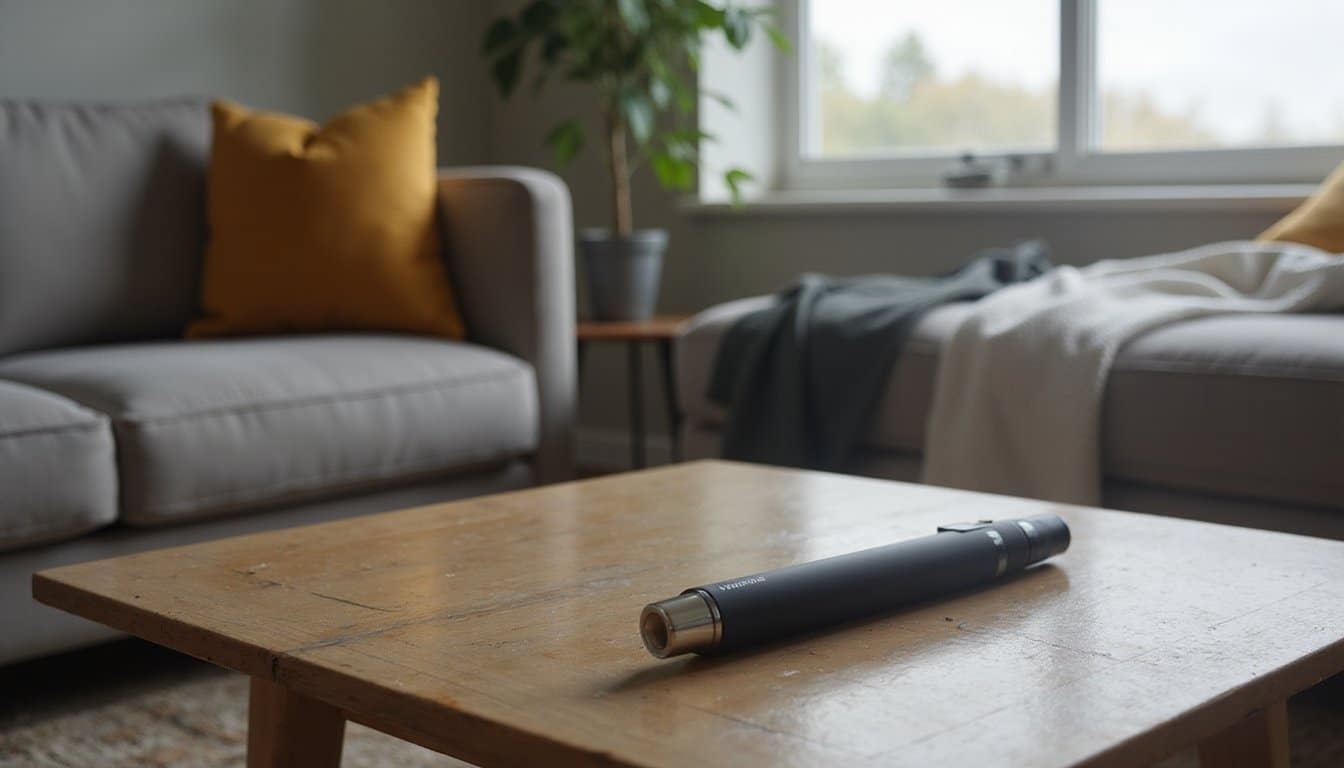
How much CBD you vape directly influences the severity of side effects you’ll experience. Research demonstrates a clear dose-dependent relationship: higher doses (15 mg/kg/day) in clinical trials produced somnolence, decreased appetite, and elevated liver enzymes in 9% of participants. When using a cbd pen anxiety relief, you’re subject to these same principles.
Key dosage-related risks include:
- High doses (350-2000 mg/day) cause tiredness, diarrhea, and appetite changes more frequently than low doses
- Low doses (2.4 mg/kg/day) show neutral side effect profiles in controlled studies
- Vaping-specific concerns amplify risks because product purity and dosage inconsistency remain unreliable across manufacturers
You should start with minimal doses and monitor your response carefully, as individual tolerance varies considerably.
CBD Vape Pens vs. Anxiety Meds: A Safety Comparison
When comparing CBD vape pens to prescription anxiety medications, the safety data reveals distinct risk profiles you should understand.
Prescription anxiety drugs frequently cause side effects, cognitive difficulties, and dependency with prolonged use. Traditional medications for generalized and social anxiety disorders show higher adverse event profiles than CBD in clinical reviews. Many patients actively seek alternatives due to these medication burdens. Prescription anxiety drugs frequently cause side effects, cognitive difficulties, and dependency with prolonged use. Traditional medications for generalized and social anxiety disorders show higher adverse event profiles than CBD in clinical reviews, which is why many patients look for alternatives like vaping products, yet these options are increasingly anxiety pens under medical scrutiny due to safety, regulation, and ingredient concerns. Many patients actively seek alternatives because of the burdens associated with long-term medication use.
Traditional anxiety medications often bring unwanted side effects and dependency risks, driving many patients to explore safer alternatives.
CBD demonstrates minimal adverse effects compared to placebo in anxiety treatment studies. Research shows single doses of 300-800 mg reduce anxiety without significant side effects. Human trials report no potential for abuse or dependence with CBD use.
You’ll find CBD relieves anxiety with fewer risks than both THC products and conventional pharmaceuticals. CBD-dominant formulations link to less paranoia and don’t carry the dependency concerns associated with standard anxiety medications.
Signs CBD Vaping Isn’t Right for Your Anxiety
Several warning signs indicate CBD vaping may not suit your anxiety management needs. Research shows CBD vaping can actually worsen anxiety symptoms rather than relieve them. Adolescents who vape CBD show 1.7 times higher likelihood of experiencing anxiety compared to non-vapers. Several warning signs indicate CBD vaping may not suit your anxiety management needs. Research shows CBD vaping can actually worsen anxiety symptoms rather than relieve them in some individuals. These outcomes highlight potential anxiety pen side effects, especially when products vary widely in formulation and dosage. Adolescents who vape CBD show 1.7 times higher likelihood of experiencing anxiety compared to non-vapers.
Consider stopping CBD vaping if you notice:
- Increased anxiety symptoms, Studies found 600 mg doses triggered heightened anxiety, and 70% of cannabis vapers reported panic attacks, flashbacks, or persistent worries within the past week.
- Persistent fatigue or sedation, Clinical trials consistently identify tiredness and drowsiness as the most common CBD side effects.
- No symptom improvement, Research shows 60% of single CBD doses provided no anxiolytic effect across multiple trials.
Consult your healthcare provider if these signs persist.
How to Reduce Side Effects Without Losing Relief
Though CBD vaping may cause unwanted effects like fatigue or heightened anxiety, you can minimize these risks while preserving therapeutic benefits through targeted strategies.
Start with the lowest effective dose, as research shows acute doses up to 300-600 mg oral equivalent reduce anxiety without anxiogenic effects. Titrate gradually and monitor for mild side effects, which typically resolve with dose reduction.
Select third-party tested products to avoid contaminants linked to lung injuries. Choose CBD-dominant formulations without THC or nicotine, since dual cannabinoids trigger anxiety in 60-70% of users.
Inhale minimally to reduce lung exposure while maintaining fast-acting relief. Limit use to short-term acute sessions, timing them for peak anxiety moments. If tolerance develops, supplement with oral CBD forms to sustain anxiolytic effects through consistent CB1R activation.
Take the First Step Toward Recovery Today
Frequently Asked Questions
Can CBD Vape Pens Interact With My Current Anxiety Medication?
Yes, CBD vape pens can interact with your anxiety medication. CBD inhibits liver enzymes like CYP2D6, which metabolize many SSRIs, benzodiazepines, and other psychiatric drugs. This interaction may raise or lower your medication’s blood levels, potentially reducing effectiveness or increasing side effects. Research confirms CBD affects sertraline, citalopram, alprazolam, and diazepam metabolism. You should consult your healthcare provider before combining CBD with any anxiety treatment.
How Long Do CBD Vape Pen Side Effects Typically Last?
Research hasn’t established specific duration timelines for CBD vape side effects in humans. Acute effects like fatigue, dry mouth, and cognitive changes likely resolve within hours based on comparable inhalation studies. However, inflammatory lung responses and immune suppression effects may persist longer, current evidence can’t quantify recovery timelines. You’re maneuvering significant research gaps here. Scientists explicitly acknowledge they don’t yet know how long vaping-induced tissue damage lasts or whether full repair occurs.
Are CBD Vape Pens Safe for People With Respiratory Conditions?
No, CBD vape pens aren’t safe if you have respiratory conditions. Research shows CBD aerosol triggers stronger inflammatory responses than nicotine, increasing CD4+ and CD8+ T cells and neutrophils in your lungs. You’ll face elevated oxidative stress, potential epithelial barrier damage, and worsened focal lesions. Studies link asthma diagnosis to heightened lung injury risk from vaping. Chronic use could aggravate existing conditions and increase your susceptibility to respiratory infections.
Will CBD Vaping Show up on a Drug Test?
Pure CBD won’t trigger standard drug tests since they screen for THC metabolites, not CBD. However, you face real risk if your vape contains full-spectrum CBD, which includes up to 0.3% THC. Regular use can accumulate detectable THC levels in your system. To minimize test failure, you should choose CBD isolate or broad-spectrum products. If you vaped CBD 10 days before testing, you’ll likely pass unless THC contamination occurred.
Can I Develop Tolerance to CBD Vape Pens Over Time?
You’re unlikely to develop significant tolerance to CBD vape pens over time. Research shows CBD doesn’t cause the receptor desensitization that THC produces, meaning you probably won’t need increasing doses. Some evidence actually suggests “reverse tolerance,” where you may require less CBD with continued use. However, if you notice diminishing effects, try lowering your dose before increasing it. Studies remain limited, so monitor your individual response carefully.