






Kratom comes from Mitragyna speciosa, a Southeast Asian tree in the coffee family. Its two key alkaloids, mitragynine and 7-hydroxymitragynine, bind to your mu-opioid receptors and also affect serotonin, dopamine, norepinephrine, and adrenergic pathways. At low doses (1, 5 g), you’ll feel stimulant-like focus and energy; higher doses bring sedation and euphoria. You might experience increased heart rate, nausea, dizziness, and dry mouth. Below, you’ll discover how these effects unfold over time. Why kratom acts like an opioid can be attributed to its interaction with the same pathways that traditional opioids target. This similarity raises questions about its potential for addiction and abuse, yet kratom proponents argue it offers a safer alternative for pain relief.
What Is Kratom and Where Does It Come From?
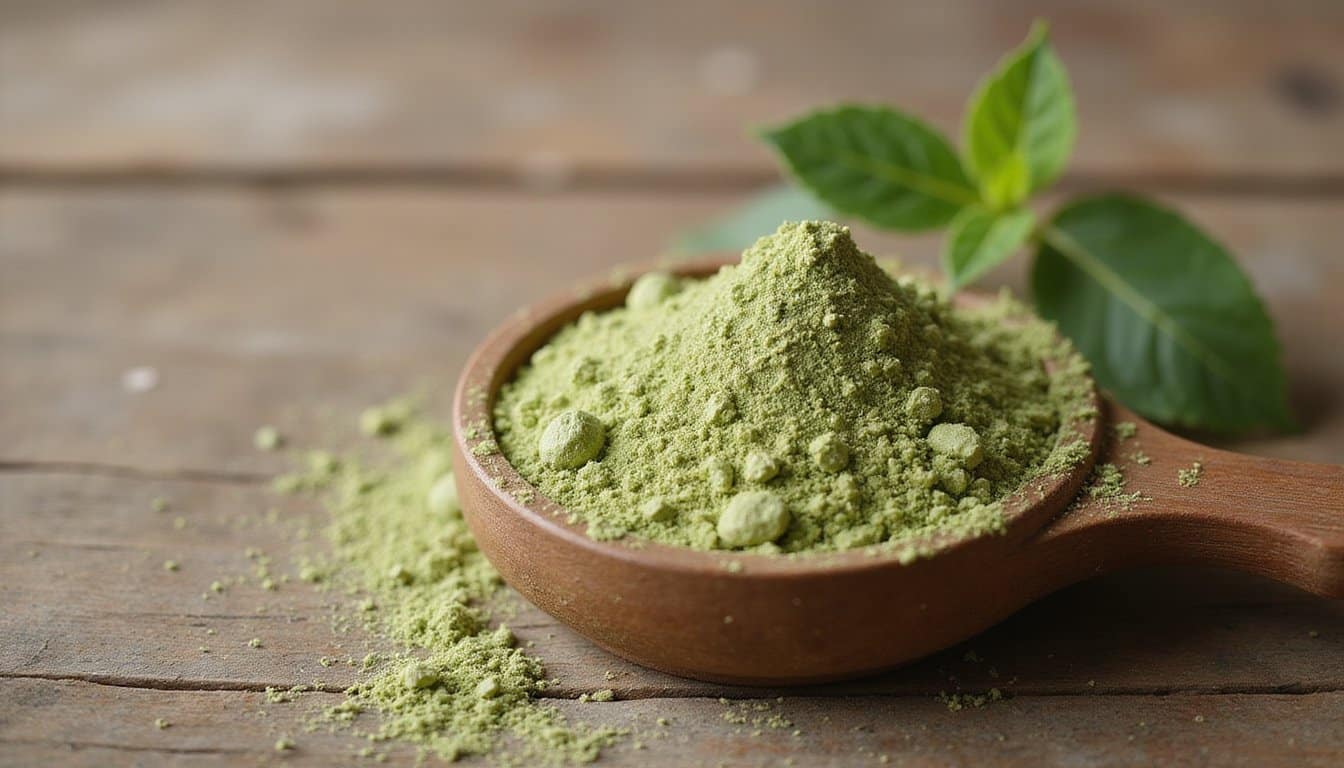
Kratom is the leaf of Mitragyna speciosa, a tropical evergreen tree in the coffee family (Rubiaceae) native to Southeast Asia. When you ask what is kratom, you’re really asking about the leaves and leaf extracts of this plant, which contain the alkaloids mitragynine and 7-hydroxymitragynine.
The geographic origin spans Thailand, Malaysia, Indonesia, Myanmar, Cambodia, and Papua New Guinea, with most commercial cultivation concentrated in Malaysia, Thailand, and Indonesia. The tree’s also occasionally grown elsewhere, including the United States.
You’ll find kratom under names like ketum, biak-biak, Maeng Da, thang, thom, and kakuam. People in Southeast Asia have chewed the leaves or brewed them as tea since at least the 19th century, using them for fatigue, pain, and work productivity. Historically, kratom has also been used as a substitute for opium and to alleviate opioid withdrawal symptoms.
Why Do People Use Kratom?
People reach for kratom mostly because its active compounds bind to opioid receptors in the brain, producing pain relief and opioid-like effects at higher doses. You’ll find that this same mechanism drives its two most common uses: managing chronic pain and self-treating opioid withdrawal. At lower doses, kratom provides stimulant effects that some people seek for improved focus and energy. While these applications explain kratom’s appeal, they also carry documented risks like dependence, liver toxicity, and respiratory depression.
Pain and Symptom Relief
Pain relief drives most kratom use. A nationwide survey found nearly half of Americans who use kratom report chronic pain, and Johns Hopkins data show 91% take it to alleviate pain, often back, shoulder, and knee pain, plus arthritis and fibromyalgia. Kratom effects stem from mitragynine and 7-hydroxymitragynine, which bind opioid receptors in your brain, explaining its analgesic action. Kratom uses extend beyond pain: you might notice mood improvement, reduced anxiety, relaxation at higher doses, and reduced fatigue or sharper alertness at lower doses. Traditionally, Southeast Asian users took it for pain, diarrhea, and work productivity. Most people self-manage daily, repeated pain episodes rather than occasional flare-ups. Notably, participants reported very high perceived pain relief after taking kratom for both acute and chronic pain. Still, kratom on the body rests largely on surveys and self-reports, not randomized trials, so interpret reported relief cautiously.
Managing Opioid Withdrawal
Because mitragynine and 7-hydroxymitragynine bind the same mu-opioid receptors that prescription opioids do, some people reach for kratom to self-manage opioid withdrawal. Understanding how kratom works clarifies why you might substitute kratom powder during tapering or abrupt discontinuation, especially when prescribed opioid access has decreased.
| Aspect | Finding | Source Type |
|---|---|---|
| Receptor action | Binds mu-opioid receptors | Mechanistic |
| Withdrawal relief | Reduced symptoms | Animal study |
| Respiratory effect | Minimal depression | Animal study |
| Human efficacy | Unconfirmed | FDA/review |
| Dependence | Can develop | FDA warning |
How Does Kratom Affect Your Brain and Body?

To understand how kratom can both energize and sedate, you have to look at what its alkaloids do at the receptor level. Its two main compounds, mitragynine and 7-hydroxymitragynine, bind to your mu-opioid receptors, the same ones opioids target. They also act on serotonin, dopamine, norepinephrine, and adrenergic pathways, which control your mood, focus, arousal, and autonomic function.
At lower doses, this activity skews stimulant-like, leaving you alert, energetic, and talkative. At higher doses, the opioid-like effects dominate, producing calmness, reduced pain sensitivity, and euphoria.
That same receptor activity drives the physical effects. Kratom can raise your heart rate and blood pressure and cause nausea, sweating, dry mouth, constipation, dizziness, and drowsiness. High doses may trigger muscle tension, tremors, and trouble breathing.
What Are the Short-Term Effects of Kratom?
When you take kratom, you’ll likely encounter physical reactions like nausea, dizziness, dry mouth, and sweating, regardless of how much you consume. What changes with dose is the character of the effect: at lower amounts, you’ll feel stimulant-like alertness and increased energy, while higher amounts shift you toward sedation, euphoria, and pain relief. This dose-dependent split reflects how kratom’s active compounds engage your brain’s receptors differently as their concentration rises.
Common Physical Reactions
Since kratom’s active compounds hit the same receptors that stimulants and opioids do, the short-term effects you’ll feel depend largely on how much you take. Your gastrointestinal system often reacts first: nausea ranks among the most commonly reported effects, and you might experience vomiting, sometimes continuous. Constipation is a frequent acute reaction, while loss of appetite and dry mouth round out the digestive picture.
Beyond your gut, you’ll likely notice autonomic changes driven by the same receptor activity. Sweating is a common physical response, and itching shows up frequently, a hallmark of opioid-receptor engagement. Some users report increased urination too.
These reactions aren’t random; they map directly onto how kratom’s alkaloids bind opioid and adrenergic receptors, shifting your body’s normal regulation in measurable, predictable ways.
Dose-Dependent Effects
Because kratom’s alkaloids, mainly mitragynine and 7-hydroxymitragynine, engage different receptor systems depending on how much you take, the drug’s short-term effects split along a clear dose-dependent line. At low doses, roughly 1 to 5 grams, you’ll feel stimulant-like effects lasting about 60 to 90 minutes. As the dose climbs, the alkaloids bind more heavily to opioid receptors, shifting you toward sedation. Here’s how that progression typically unfolds:
- Low (1, 5 g): Increased energy, alertness, sociability, and talkativeness.
- Moderate: Elevated mood, reduced inhibition, and mild euphoria.
- High: Sedation, pain relief, euphoria, confusion, and loss of motor coordination.
- Very high (above 15 g): Agitation, irritability, aggression, and possible hallucinations or delusions.
You’ll notice the same compound produces opposite effects, making dose your primary variable.
What Are the Long-Term Risks of Kratom?

Although kratom’s short-term effects often dominate the conversation, its long-term risks are where the real concern lies. With chronic use, you risk hepatotoxicity, marked by elevated liver enzymes documented in case literature and flagged in FDA warnings. Your kidneys and heart aren’t spared either, reviews link regular use to dose-dependent QTc prolongation, raising arrhythmia risk, alongside cardiomyopathy and myocardial ischemia in observational data. Neurologically, you may develop cognitive impairment affecting visual and new learning, plus tremors, seizures, and psychiatric effects like psychosis or depression. Because kratom binds opioid receptors, you’ll build tolerance and physical dependence, triggering withdrawal within 1, 12 hours of your last dose. Long-term users also report weight loss, anorexia, and persistent gastrointestinal disruption, compounding the cumulative damage.
Can You Get Addicted to Kratom?
Yes, you can get addicted to kratom, and the mechanism traces back to those same opioid receptors driving its long-term risks. Mitragynine and 7-hydroxymitragynine act as partial mu-opioid agonists, so repeated activation produces tolerance, physical dependence, and eventually substance use disorder. The FDA documents real SUD cases meeting clinical criteria:
- Cravings that compel continued use despite harm
- Tolerance, requiring larger doses for the same effect
- Loss of control, using longer and in greater amounts than intended
- Withdrawal, resembling opioid withdrawal when you stop
Higher doses and longer-term use amplify these patterns, and recreational use or self-treating pain, anxiety, or depression raises your risk further. The Mayo Clinic and University of Utah Health both confirm kratom carries genuine addiction potential.
Call Today and Heal With Expert Support
When kratom use begins shaping your routine, your moods, or your relationships, reaching out is the strongest move you can make. At Eleve Wellness in Hillsborough Township, NJ, our caring professionals deliver dependable Outpatient Addiction Treatment built around your unique needs and circumstances. Call (833) 902-7098 today and begin a healthier chapter in your life.
Frequently Asked Questions
How Long Does Kratom Stay in Your System?
Kratom typically clears your system in 1 to 5 days with occasional use, though detection depends on the test. Urine catches mitragynine for 1 to 9 days, sometimes up to 2 weeks in chronic users. Blood detects it for 24 to 72 hours, saliva for 1 to 2 days, and hair theoretically for 90 days. Since mitragynine’s half-life runs around 24 hours, you’ll need roughly five half-lives for substantial elimination.
Can Kratom Show up on a Drug Test?
Kratom won’t usually show up on standard drug tests, including common 5-panel, 10-panel, and 12-panel screens, because these target substances like THC, opioids, and amphetamines, not kratom alkaloids. Standard opioid immunoassays don’t cross-react with kratom’s main compounds, so use alone won’t trigger an opioid-positive result. You’ll only test positive on specialized panels screening for mitragynine and 7-hydroxymitragynine, typically confirmed by LC/MS-MS, which someone must specifically order.
Is It Safe to Drive After Taking Kratom?
Driving after taking kratom isn’t reliably safe. Kratom’s active compounds bind opioid receptors, producing dose-dependent effects: lower doses feel stimulant-like, while higher doses cause sedation, drowsiness, dizziness, confusion, and slowed reaction time. Because product strength varies and individual responses differ, you can’t predict impairment. These effects can degrade vehicle control and support a DUI or reckless driving charge. You’re safest avoiding driving until all impairing effects fully clear.
Can You Use Kratom While Pregnant or Breastfeeding?
No, you shouldn’t use kratom while pregnant or breastfeeding. Its alkaloids, mitragynine and 7-α-hydroxymitragynine, bind opioid receptors and cross into the fetus and likely breast milk. Case reports consistently link prenatal exposure to maternal dependence and neonatal withdrawal, anxiety, tremors, sweating, often requiring morphine treatment. Reported risks include premature delivery, growth restriction, and fetal demise. Since it’s unregulated, potency and contamination vary unpredictably. If you’re using kratom, talk with a clinician about stopping safely.