






No, marijuana isn’t really a gateway drug. The evidence doesn’t support a causal link. A 2018 National Institute of Justice review of 23 studies found correlation, but not causation. Yes, marijuana use often precedes other illicit drug use, but sequencing doesn’t prove cause. In fact, the overwhelming majority of people who try marijuana never progress to harder substances. So what actually explains the risk associations you’ve heard about? The answer might surprise you.
Key Takeaways
- A 2018 National Institute of Justice review of 23 studies found no proven causal link between marijuana and harder drug use.
- Marijuana use often precedes other illicit drug use, but this sequencing is correlation, not causation.
- The overwhelming majority of people who try marijuana never progress to harder substances.
- Common liability to addiction, shaped by genetics and environment, explains risk associations better than staging models.
- Prohibition-era policy and messaging fueled the gateway narrative despite variable, opportunistic drug sequencing.
Is marijuana really a gateway drug
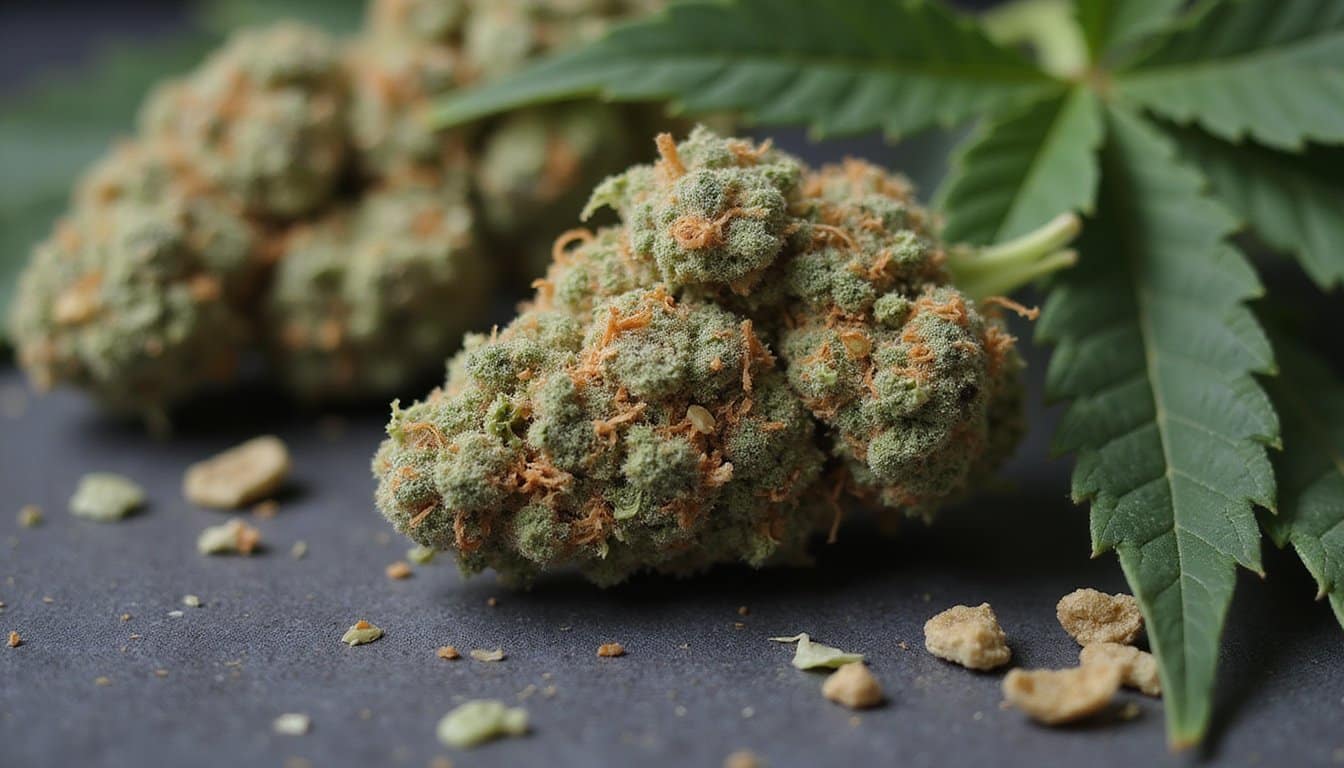
Marijuana is not really a gateway drug. For decades, the gateway hypothesis has shaped public perception of marijuana, framing it as a stepping stone to harder drugs. But when you examine the evidence, you’ll find little support for this claim. Marijuana use often precedes other illicit drug use, but this sequence doesn’t establish causation. A 2018 National Institute of Justice review analyzed 23 studies and found no proven causal link. You should understand that statistical associations aren’t the same as cause and effect. The overwhelming majority of people who try marijuana never progress to harder substances, and most cease use by middle age. Researchers now attribute these associations to a common liability to addiction, along with individual propensities and social conditions, not marijuana itself. None of this means cannabis is harmless. Cannabis use disorder is real, affecting roughly 9% of people who use, rising to about 17% among those who start in adolescence and higher still with daily use. The gateway theory being wrong doesn’t mean the substance is risk-free. It means the risk is the drug itself, not a doorway to something else. The pharmacological foundation for a gateway effect remains unsubstantiated. Understanding gateway drug examples requires looking beyond the substances themselves. Factors like mental health, environment, and accessibility also influence addiction risk.
What does research say about the claim
Research shows mixed results that fail to support the gateway hypothesis. Studies consistently show associations between cannabis use and later illicit drug use, but they don’t establish causation. The evidence reveals several key findings: The gateway drug theory explores whether early substance use may increase the risk of trying more dangerous drugs. Individual and environmental factors also play a key role in this progression.
Correlation isn’t causation, cannabis use links to later drug use, but the gateway hypothesis remains unproven by the evidence.
- A 2018 National Institute of Justice review analyzed 23 studies and found no proven causal link.
- Pharmacological explanations for a gateway effect from marijuana have no foundation.
- Inconsistent results across different populations undermine the hypothesis’s coherence.
- Common liability to addiction explains risk associations better than specific staging models.
Marijuana typically precedes other drug initiation, but sequencing appears variable and opportunistic rather than deterministic. Current research simply lacks robust studies sufficient to support causation.
How did marijuana get labeled this way

The gateway label persists because researchers observed that marijuana use typically precedes other illicit drug initiation, and that pattern became mistaken for cause. But this is an association, not causation. When you see people who used harder drugs, many report using cannabis first, yet most people who try marijuana never progress at all. Understanding gateway drugs requires looking beyond common misconceptions. Education and evidence-based discussions can help separate myths from scientific research.
The label also gained traction through prohibition-era policy and messaging, which framed cannabis as a first step toward addiction. Statistical associations reinforced this narrative, even though drug use sequencing is variable and opportunistic. What’s often overlooked is common liability to addiction, which explains these risk associations better than any specific staging model does.
Does using it cause people to use harder drugs
No, using marijuana does not cause people to use harder drugs. Although marijuana use often precedes harder drug use, that sequence doesn’t establish causation. When you look closely at the evidence, you find association rather than proof. A 2018 National Institute of Justice review of 23 studies found no causal link, and pharmacological explanations for a gateway effect have no foundation. Consider what the research actually shows: Gateway drug statistics show that most marijuana users do not progress to harder substances. Understanding the data can help separate common myths from research findings.
Marijuana use often precedes harder drug use, but that sequence reveals association, not causation.
- The overwhelming majority who try marijuana never progress to other illicit drugs.
- Your opportunities, life situation, and social conditions influence progression more than the drug itself.
- A common liability to addiction explains risk better than specific staging models.
- Drug sequencing is variable and opportunistic, not developmentally deterministic.
What role do environment and genetics play

Environment and genetics carry far more weight than cannabis exposure in driving progression. Your life situation, your opportunities, social conditions, and access to harder substances, largely shapes whether progression occurs. Researchers point to a “common liability” to addiction, suggesting shared genetic and environmental vulnerabilities explain observed associations better than any staging model.
| Factor | Proposed Influence | Evidence Strength |
|---|---|---|
| Environment | Access, opportunity, social context | Moderate |
| Genetics | Addiction vulnerability, gene expression | Emerging |
| Adolescent brain | Altered opioid sensitivity | Preliminary |
You should note that individual variation matters substantially. Adolescent brain development and gene expression changes may affect vulnerability, though this evidence remains preliminary and warrants cautious interpretation.
What is the current scientific consensus
Scientists don’t share a single consensus on the gateway effect. What researchers do increasingly acknowledge, though, is that the evidence for a causal gateway effect remains weak. Consider what current research shows:
The gateway theory lacks solid causal evidence, and researchers increasingly question whether it holds up at all.
- Little to no hard evidence supports the claim that cannabis use directly causes hard drug addiction.
- A 2018 National Institute of Justice review of 23 studies found no proven causal link.
- Statistical associations exist, but they don’t establish that marijuana causes later drug use.
- Common liability to addiction explains these risk associations better than staging models.
You’ll find many experts now regard the gateway theory as outdated, though the field hasn’t reached full agreement on the question.
How does Élevé Wellness help people with marijuana use
Élevé Wellness helps people with marijuana use by offering evidence-based assessment rather than assumptions rooted in outdated gateway theories. If you’re concerned about your cannabis use, you’ll receive an evaluation grounded in current research, which recognizes that most users don’t progress to other substances and that individual factors, your circumstances, propensities, and social conditions, shape risk more than the drug itself.
Élevé Wellness focuses on your specific situation, addressing the common liability to addiction that research identifies as more relevant than staging models. You won’t be treated according to a deterministic framework the science doesn’t support. Instead, you’ll get individualized care that accounts for the variables genuinely influencing your patterns and outcomes.
Concerned About Your Use? Get a Real Assessment.
Forget whether weed is a gateway. The question worth answering is whether your use is costing you something, and that has nothing to do with a debate from the 1980s. Élevé Wellness in Hillsborough evaluates your actual patterns and circumstances instead of running you through a framework the science doesn’t back, with outpatient care that works around your schedule and co-occurring treatment when anxiety or depression is tangled up in it.
Call (833) 902-7098 now or verify your insurance free and confidentially.
Frequently Asked Questions
Is marijuana legal for medical or recreational use in my state?
That depends on where you are, and the picture changes frequently. Élevé Wellness is in New Jersey, where both medical and adult recreational use are legal, though possession limits, purchase rules, and employer policies still apply. Other states differ widely, and cannabis remains federally illegal regardless of state law. Check your state government’s site for current rules rather than relying on summaries.
What Are the Short-Term and Long-Term Health Effects of Marijuana?
You’ll likely notice short-term effects like altered perception, impaired memory, slowed coordination, increased heart rate, and anxiety. These typically fade within hours. Long-term, you might experience respiratory issues if you smoke, potential dependence, and possible cognitive changes, especially if you start young. It’s worth noting that current research on marijuana’s effects remains mixed, and individual responses vary. You should consult a healthcare provider to assess your specific risks.
Can You Become Physically Addicted to Marijuana?
You can develop dependence on marijuana, though the evidence on physical addiction is more nuanced than with substances like opioids. If you use it regularly, you might experience withdrawal symptoms i.e. irritability, sleep difficulties, appetite changes, when you stop. However, individual variation matters considerably, and most people don’t progress to problematic use. Your risk depends on factors like frequency, dosage, and personal vulnerability. If you’re concerned, consult a healthcare provider for personalized guidance.
How does marijuana affect driving ability and workplace safety?
It impairs reaction time, coordination, tracking, and judgment, and it’s a real crash risk. Impairment typically peaks within the first hour or two of inhalation and lasts longer with edibles, which take effect more slowly and are easier to over-consume. Unlike alcohol, there’s no reliable roadside test that maps blood THC to impairment, and THC can stay detectable long after effects wear off, which matters for workplace testing. Being legal where you live doesn’t make driving under the influence legal or safe.
What Treatment Options Exist for Marijuana Dependence?
You’ve got several evidence-based options for marijuana dependence. You can pursue cognitive behavioral therapy, which helps you identify and change use patterns, or motivational enhancement therapy to strengthen your commitment to change. Contingency management, offering tangible rewards for abstinence, has also shown promise. Currently, there aren’t any FDA-approved medications for cannabis dependence, so behavioral interventions remain your primary approach.