





Despite its nickname, alcoholic nose isn’t caused by drinking. Rhinophyma is a chronic thickening of your nasal skin, oil glands, and connective tissue that clinicians regard as advanced rosacea. Researchers haven’t pinned down its cause, and many people who have it drink little or none. It’s most common in middle-aged white men. You’ll treat early redness and bumps with medications, while established overgrowth needs surgery or lasers. You’ll see how it progresses and which treatments work.
Key Takeaways
- Rhinophyma is a chronic thickening of nasal skin, oil glands, and connective tissue, often considered an advanced form of rosacea.
- Despite the “alcoholic nose” nickname, heavy drinking has not been shown to directly cause rhinophyma, and its exact cause remains unknown.
- Rhinophyma most often affects middle-aged white men, and many people with the condition drink little or no alcohol.
- Early rhinophyma may respond to rosacea medicines like antibiotics or isotretinoin, but established thickening usually isn’t reversed by medication alone.
- Advanced rhinophyma is treated with surgical excision, electrosurgery, dermabrasion, or laser therapy, though recurrence may require repeat treatment.
What is alcoholic nose (rhinophyma)

Rhinophyma, often called “alcoholic nose,” is a chronic condition in which your nasal skin, sebaceous glands, and underlying connective tissue thicken and overgrow. Despite the nickname, it isn’t caused by drinking. Clinicians often regard it as an advanced, phymatous form of rosacea, though you can develop it without a known rosacea diagnosis. Researchers still don’t fully understand its exact cause. Alcohol may aggravate rosacea symptoms in some people, but that differs from causing rhinophyma. Studies are mixed: one meta-analysis found no overall link between alcohol and rosacea, though a subgroup analysis suggested an association with phymatous rosacea. Even so, an association doesn’t prove alcohol causes it. You’re more likely to see rhinophyma in middle-aged white men, but it remains uncommon compared with rosacea overall.
What causes rhinophyma and how alcohol contributes
No one knows exactly what causes rhinophyma, and heavy drinking doesn’t directly cause it. Researchers haven’t pinned down the biological mechanism that drives the thickening of nasal skin, sebaceous glands, and connective tissue. Doctors often view it as an advanced, phymatous form of rosacea, though you can develop it without a rosacea diagnosis.
Despite the nickname, you won’t find evidence establishing a causal link between alcohol and rhinophyma. Research is mixed. One meta-analysis found no overall association between alcohol and rosacea risk, but its subgroup analysis linked alcohol with phymatous rosacea. An association isn’t proof of causation. If you have rosacea, alcohol may aggravate your symptoms, but that’s different from causing tissue overgrowth. Assuming someone with rhinophyma drinks heavily is a common misconception that can unfairly stigmatize them.
Why not everyone with rhinophyma drinks heavily

Rhinophyma isn’t caused by heavy drinking, so many people who have it drink little or no alcohol. Its known risk patterns center on sex, age, and skin type rather than drinking habits, which means you can’t infer someone’s alcohol use from their nose. It’s more common in men, often white men, with onset typically described in middle age. Evidence hasn’t established that heavy drinking causes it, so the “alcoholic nose” label misleads.
Alcohol may aggravate rosacea flare-ups in some people, but aggravating symptoms isn’t the same as causing tissue overgrowth. Research is mixed: one meta-analysis found no overall link between alcohol and rosacea, though a subgroup analysis associated drinking with phymatous rosacea. That association doesn’t prove causation.
You’ll also see rhinophyma develop without a known rosacea diagnosis, and its exact cause remains unclear. Assuming heavy drinking only adds unwarranted stigma to patients.
What the condition looks like as it progresses
Rhinophyma progresses from nasal redness and small bumps, which can resemble ordinary rosacea, to a thickened, bulbous, or irregularly shaped nose. As the skin, sebaceous glands, and connective tissue thicken, you may notice changes in three main areas:
Rhinophyma starts with redness and small bumps, then thickens skin, oil glands, and connective tissue into a bulbous, irregular nose.
- Surface changes: Your pores enlarge, oil glands become visible, and the skin feels rough or waxy.
- Color and swelling: The nose can look red, purple, or discolored, with swelling and increased oiliness.
- Structural overgrowth: Lumps develop, and your nose becomes bulbous or irregularly shaped.
Advanced overgrowth doesn’t just alter appearance. It can distort nasal contour and even obstruct breathing.
These changes reflect tissue overgrowth, not proof of drinking. You can’t judge someone’s alcohol use by their nose, and if you notice progression, a dermatologist can examine and accurately assess it early.
How rhinophyma compares to normal rosacea
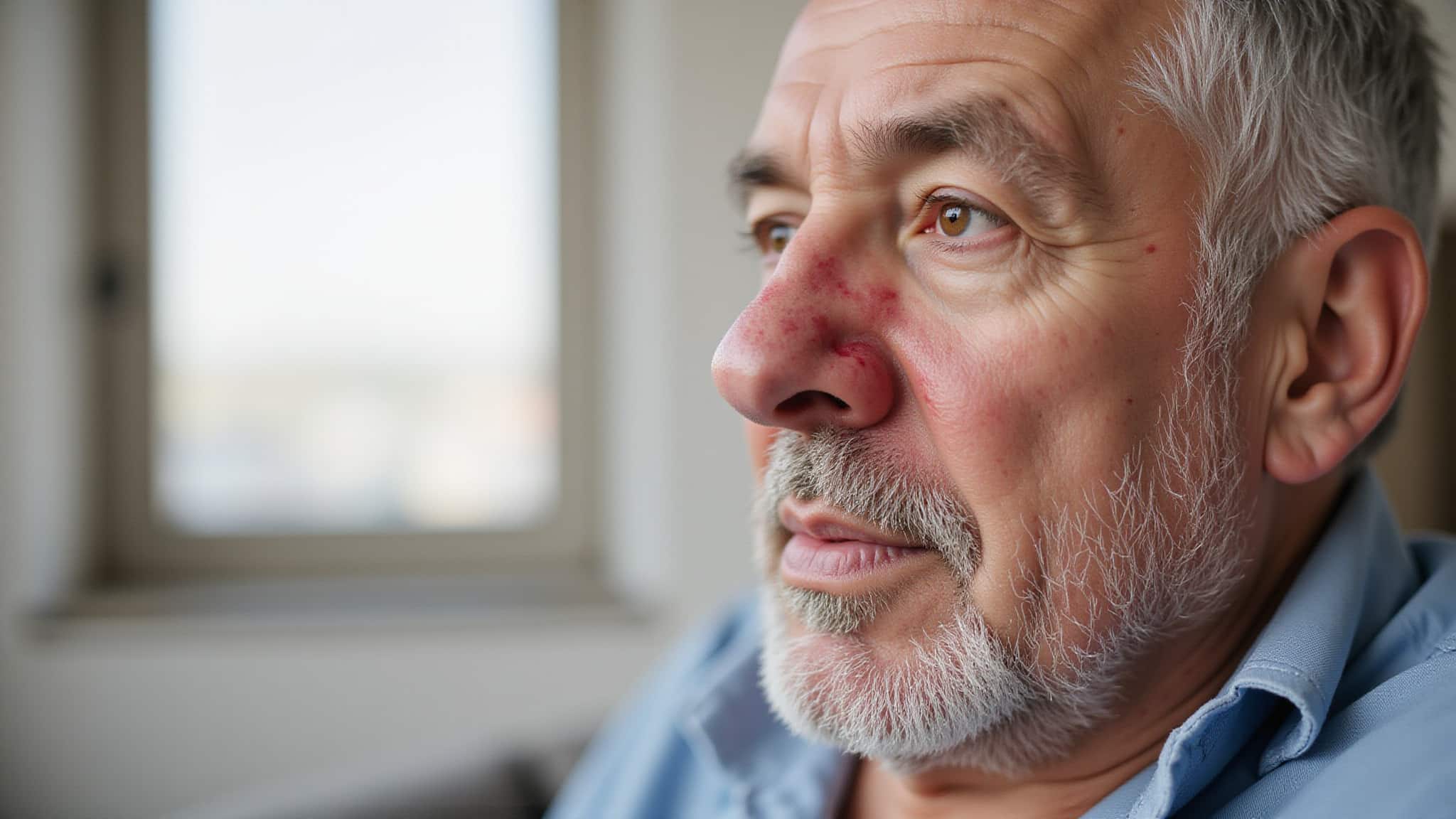
Rhinophyma is an advanced, phymatous form of rosacea that thickens nasal skin and connective tissue, while typical rosacea usually causes facial redness and bumps. You can also develop rhinophyma without a known rosacea diagnosis.
| Feature | Typical rosacea | Rhinophyma |
|---|---|---|
| Frequency | Common | Uncommon |
| Main changes | Redness, bumps | Tissue overgrowth, bulbous nose |
| Medication response | Often improves | Rarely reverses structural growth |
Evidence doesn’t show alcohol directly causes either condition. It may aggravate your rosacea symptoms, and one meta-analysis linked alcohol to phymatous rosacea in a subgroup, but that doesn’t prove causation. Men, especially middle-aged white men, develop rhinophyma more often than women. If your nose thickens, you’ll need procedural treatment to remove excess tissue rather than medication alone.
What medical and surgical treatment options exist
Rhinophyma treatment includes rosacea medicines for early changes and procedures that remove excess tissue for advanced overgrowth. If you have early changes, your dermatologist may prescribe rosacea medicines such as antibiotics or isotretinoin. These can help selected cases, but they usually won’t reverse established structural thickening.
For advanced overgrowth, procedures that remove excess tissue and reshape your nose are the principal treatment:
- Surgical excision: Your surgeon uses a scalpel or razor to shave away thickened tissue.
- Electrosurgery or dermabrasion: These methods remove and smooth overgrown skin layers.
- Laser therapy: CO₂ and other lasers vaporize or contour excess tissue.
Your clinician may consider cryotherapy or combine approaches based on severity and anatomy. Treatment can restore contour and improve breathing, but it isn’t a guaranteed cure. Recurrence can occur, requiring repeat treatment.
How Élevé Wellness helps people address the underlying drinking
Élevé Wellness helps you address the underlying drinking by starting with a confidential assessment of your drinking patterns, health history, and goals. From there, you and your care team can build a plan that fits your needs.
This support is for anyone drinking more than they intend, struggling to cut back, or noticing effects on their health, work, or relationships. Rhinophyma isn’t proof of an alcohol problem, and quitting drinking won’t reverse established nasal overgrowth. Evidence doesn’t show alcohol causes rhinophyma, though it may aggravate rosacea flare-ups in some people. So your nose shouldn’t be the reason you seek help. Your relationship with alcohol should.
Pair that support with separate dermatology care. Your dermatologist treats the thickened nasal skin, and Élevé Wellness helps you address the drinking itself.
Conclusion
The most important takeaway about “alcoholic nose” is that the name is misleading: rhinophyma is an advanced, phymatous form of rosacea, its exact cause is still unknown, and heavy drinking has not been shown to cause it. Many people who have it drink little or no alcohol, it’s most common in middle-aged white men, and assuming otherwise only adds unfair stigma. Alcohol may aggravate rosacea flare-ups in some people, but aggravating a symptom is not the same as causing the tissue overgrowth that defines rhinophyma. The good news is that the condition is manageable: early redness and bumps may respond to rosacea medicines like antibiotics or isotretinoin, while established thickening is treated with procedures such as surgical excision, electrosurgery, dermabrasion, or laser therapy that restore the nose’s contour and can even improve breathing. If you notice your nose changing, the right next step is a dermatologist, not self-blame. And quite separately from your skin, if your relationship with alcohol is something you’ve been worrying about, that concern, on its own, is reason enough to reach out for support.
Get Expert Alcohol Recovery Support
If drinking has become harder to control, real recovery can change everything. At Élevé Wellness in Hillsborough Township, NJ, we provide Intensive Outpatient Program (IOP) with evidence-based alcohol addiction treatment and holistic healing. Verify your insurance or Call (833) 902-7098 today.
Frequently Asked Questions
How Do Doctors Diagnose Rhinophyma?
Your doctor usually diagnoses rhinophyma clinically by examining your nose and asking about your symptoms. You typically won’t need lab tests or imaging. A dermatologist may review your rosacea history and assess how much thickening and tissue overgrowth you’ve developed. If your diagnosis is uncertain, they may take a skin biopsy to rule out other conditions, including skin cancer. Despite the “alcoholic nose” label, evidence doesn’t show alcohol causes it.
Is a Skin Biopsy Needed to Confirm Rhinophyma?
Usually, no. Your dermatologist diagnoses rhinophyma clinically by examining your nose’s thickening, enlarged pores, and texture, and reviewing your rosacea history. You won’t need lab or imaging tests. Your doctor may recommend a biopsy if the diagnosis seems uncertain or they must rule out another condition, including skin cancer. Histology can confirm it, but routine biopsy isn’t necessary in typical cases. Despite the nickname, evidence doesn’t show alcohol causes it.
Can Rhinophyma Be Mistaken for Skin Cancer?
Yes, it can. Rhinophyma’s lumps, thickening, and discoloration can overlap with other nasal conditions, including skin cancer. Your dermatologist usually diagnoses it clinically by examining your nose and reviewing your rosacea history, but they may recommend a biopsy if the appearance isn’t typical or cancer needs ruling out. Tissue analysis then confirms what’s actually happening. And despite the “alcoholic nose” label, evidence simply doesn’t show that heavy drinking causes rhinophyma.
Can Rhinophyma Come Back After Surgical or Laser Treatment?
Yes, rhinophyma can return after surgery or laser treatment. These procedures remove excess tissue and reshape your nose, but they don’t guarantee a permanent cure. Your dermatologist may recommend repeat or combined treatments if overgrowth recurs. Rosacea medicines, such as antibiotics or isotretinoin, may help selected cases, but they often can’t reverse overgrowth. Despite the “alcoholic nose” label, evidence doesn’t show alcohol causes rhinophyma, so quitting drinking won’t prevent recurrence.
What Type of Doctor Should I See About Rhinophyma?
You’ll want to see a dermatologist, who can usually diagnose rhinophyma by examining your nose and reviewing your rosacea history. You won’t need lab tests or imaging, though your dermatologist may order a biopsy if the diagnosis is uncertain or skin cancer needs ruling out. Don’t assume alcohol caused it; evidence doesn’t establish that link. For established overgrowth, your dermatologist may perform or refer you for surgical or laser reshaping.