






When you purge, you’re forcing your body to lose critical electrolytes like potassium and sodium, which directly weakens your heart’s ability to contract and increases your risk of arrhythmias. Repeated vomiting erodes tooth enamel in over 90% of cases within six months and exposes your GI tract to chronic acid damage. Purging also compromises your respiratory muscles and accelerates bone density loss. Understanding each system’s specific vulnerabilities can help you recognize why early intervention matters.
How Bulimia Disrupts Your Body’s Electrolyte Balance

Electrolytes such as sodium, potassium, calcium, and chloride aren’t just minerals, they’re the body’s electrical messengers, transmitting impulses from cell to cell through tissue fluids. They regulate internal fluid levels and maintain your body’s delicate water-mineral balance. When purging expels these minerals without adequate replacement, levels drop considerably.
Self-induced vomiting flushes salts and minerals from your gastrointestinal tract. Laxative abuse depletes potassium, chloride, calcium, and bicarbonate, while diuretic misuse forces your kidneys to excrete sodium chloride and potassium through urine. Using multiple purging methods simultaneously creates extreme electrolyte disturbance profiles that compound these losses.
Among the most dangerous bulimia complications, chronic purging leaves tissues fluid-starved, preventing electrolytes from moving between cells even when you resume eating. In the most severe cases, this profound dehydration can trigger hypovolemic shock, seizures, or organ failure, making immediate medical intervention critical. Among the most dangerous bulimia complications, chronic purging leaves tissues fluid-starved, preventing electrolytes from moving between cells even when you resume eating. In the most severe cases, this profound dehydration can trigger hypovolemic shock, seizures, or organ failure, making immediate medical intervention critical. Structured approaches like cbt e for bulimia nervosa are essential not only for stopping the binge, purge cycle but also for reducing the risk of these life-threatening complications over time.
What That Electrolyte Damage Does to Your Heart
When potassium, magnesium, and sodium levels drop from repeated purging, your heart becomes one of the first organs to register the damage. Hypokalemia weakens cardiac muscle contractility, triggers arrhythmias, and prolongs QT intervals, changes visible on electrocardiograms as reduced R-wave amplitude and repolarization abnormalities. These bulimia health risks aren’t abstract; they include acute ventricular arrhythmias, cardiac arrest, and stroke during active purging episodes.
Long-term consequences compound further. Bulimia correlates with a 6.63 times higher risk of ischemic heart disease and 6.94 times greater atherosclerosis risk. Cumulative damage to cardiac myocytes can progress to congestive heart failure. Approximately 10 per 1,000 bulimia patients develop heart disease annually, with three eventually dying from complications. Some conduction defects respond to treatment, but prolonged damage can become permanent. Beyond potassium, elevated sodium levels resulting from purging behaviors can further destabilize cardiac function by causing confusion and seizures that compound cardiovascular strain.
What Bulimia Does to Your Teeth, Throat, and Gut
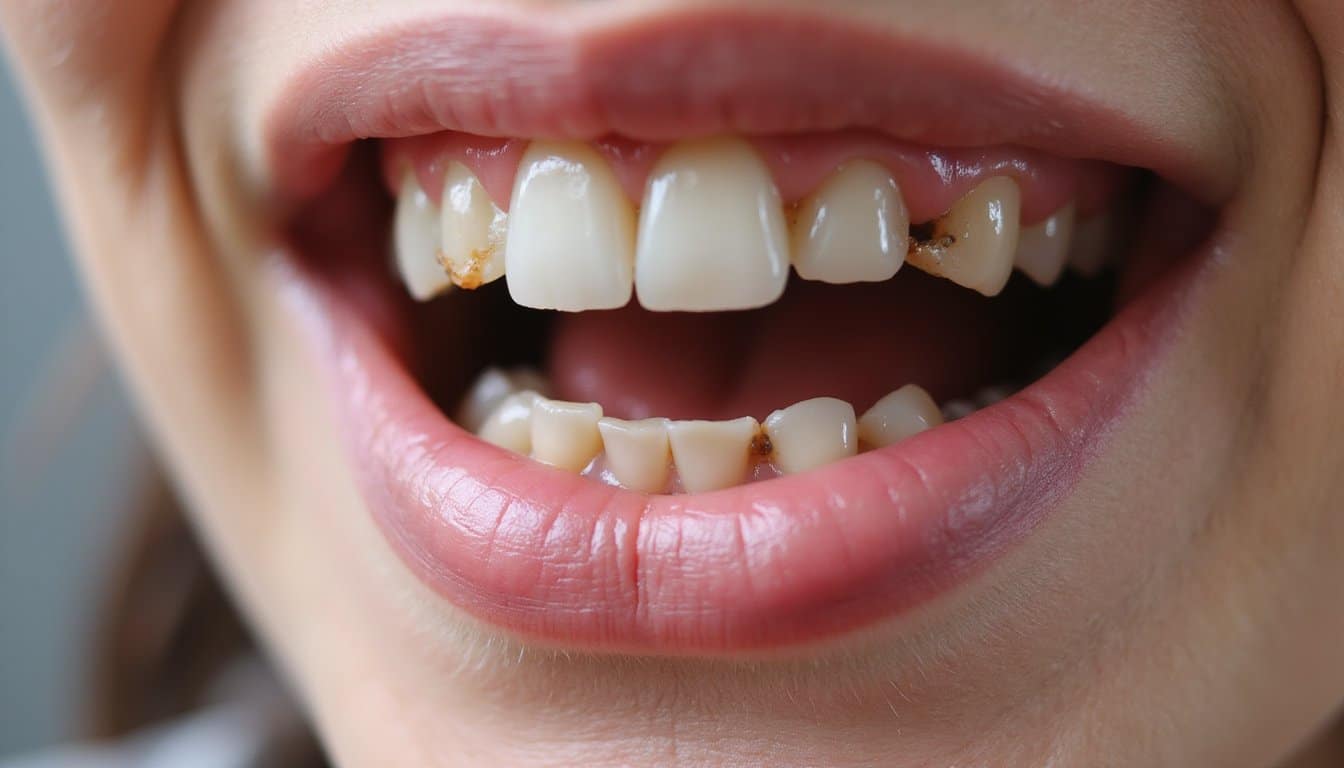
Beyond the cardiovascular system, stomach acid inflicts severe damage each time it travels upward during purging, and your teeth bear the brunt first. Hydrochloric acid dissolves enamel, and since enamel-producing cells die once teeth emerge, this damage is permanent. Over 90% of individuals with bulimia experience erosion, typically visible within six months. Teeth become brittle, yellow, and prone to chipping.
The purging impact on health extends beyond your mouth. Acid burns lip tissue, causing exfoliative cheilitis, while your palate and tongue develop an orange-yellow hue from burst blood vessels. Research documents oral lesions in 94% of patients studied. Decreased saliva production also results in severe dry mouth and cheek edema, compounding the damage to already vulnerable oral tissues.
Your entire gastrointestinal tract suffers repeated acid exposure. Reduced saliva increases cavity and infection risk, and untreated decay can progress to abscesses, sepsis, and cardiac complications.
Why Purging Puts Your Lungs at Serious Risk
The acid that strips enamel and ulcerates your esophagus doesn’t always stay on that downward-to-upward path, it can enter your airways. Aspiration of vomit causes pneumonitis and pneumonia, carrying high mortality risk among the effects of purging.
Forceful retching also spikes intrathoracic pressure, potentially causing pneumothorax, a collapsed lung requiring emergency intervention. That same pressure can trap air in your mediastinum, the space between your lungs, creating serious complications.
Beyond direct mechanical damage, purging depletes potassium, magnesium, and sodium. These electrolyte losses weaken your respiratory muscles, reducing your lungs’ ability to function effectively. Simultaneous dehydration decreases blood volume, compromising oxygen delivery throughout your body. Each purging episode compounds these respiratory risks, making early intervention critical.
How Bulimia Affects Your Bones, Hormones, and Fertility

Although bulimia’s most visible damage targets the digestive tract, its metabolic disruptions reach deep into your skeleton. The binge purge effects body-wide nutritional deficits that starve your bones of calcium, phosphate, and protein. Your parathyroid hormone activates osteoclasts to break down bone and mobilize stored calcium, accelerating density loss. Understanding bulimia nervosa meaning is crucial for recognizing its broader consequences on overall health. The disorder influences not only mental well-being but also the physical integrity of the body, leading to serious complications. As nutrients are depleted, other systems begin to falter, echoing the risks posed to skeletal strength and overall vitality.
| Factor | Impact | Recovery Potential |
|---|---|---|
| Onset before age 30 | Disrupts peak bone mass accumulation | Partial with early intervention |
| Prior anorexia history | Substantially increases bone deficit risk | Limited restoration |
| Duration of disorder | Compounds resorption over time | Diminishes after late twenties |
If you’re purging during adolescence or early adulthood, you’re compromising bone development during its most critical window. Nutritional restoration can improve bone metrics but may not fully recover lost density.
Which Bulimia Complications Are Reversible With Treatment?
When you stop purging, your body begins correcting many of the complications bulimia has caused, but recovery timelines differ markedly across organ systems. Electrolyte imbalances and dehydration typically resolve first, responding rapidly to behavioral cessation and fluid replacement. Cardiac abnormalities, including left ventricular atrophy, improve with supervised weight restoration and electrolyte normalization.
Gastrointestinal healing follows a less predictable course. Gastroparesis and stomach ulcers improve with weight restoration and smaller, calorie-dense meals, though approximately 25% of patients develop chronic digestive issues that persist despite recovery. Esophageal inflammation and throat tissue damage gradually heal once vomiting stops. Anemia, leukopenia, and nutritional deficiencies correct through rehabilitation programs. Understanding which bulimia complications respond to treatment helps you set realistic expectations and prioritize medical monitoring during recovery. Gastrointestinal healing follows a less predictable course. Gastroparesis and stomach ulcers improve with weight restoration and smaller, calorie-dense meals, though approximately 25% of patients develop chronic digestive issues that persist despite recovery. Esophageal inflammation and throat tissue damage gradually heal once vomiting stops. Anemia, leukopenia, and nutritional deficiencies correct through rehabilitation programs. Understanding which bulimia complications respond to treatment helps you set realistic expectations and prioritize medical monitoring during recovery, while also recognizing the broader signs of bulimia nervosa throughout different stages of the condition.
Frequently Asked Questions
Can Bulimia Cause Seizures or Permanent Neurological Damage Over Time?
Yes, bulimia can cause seizures and neurological damage over time. Repeated binge, purge cycles disrupt your brain’s serotonin regulation, reduce gray and white matter volume, and impair frontostriatal circuits controlling impulse and reward processing. You’re also at higher risk for psychogenic non-epileptic seizures. The longer and more severe your illness, the greater the accumulated brain damage. However, with early intervention and sustained recovery, you can reverse many of these neurological changes.
How Much Higher Is the Risk of Premature Death From Bulimia?
Research shows you’re five times more likely to have a heart attack** and six times more likely to develop coronary artery disease when you’re living with bulimia. Purging depletes potassium, which can trigger fatal cardiac arrhythmias**. You’re also at risk for kidney failure from prolonged dehydration and hypovolemic shock. These cardiovascular and renal complications represent the primary drivers of premature death in bulimia populations.
Does Bulimia Cause Swelling or Edema After Someone Stops Purging?
Yes, you can develop edema after you stop purging. Chronic purging causes severe dehydration, which triggers your body to upregulate aldosterone. This hormone drives your kidneys to resorb sodium and chloride, retaining water. When you resume normal eating, that salt and water retention produces visible swelling. Edema can persist for weeks as your electrolytes rebalance and aldosterone levels normalize. It’s a temporary physiological response, not actual weight gain.
Can Bulimia Lead to Chronic Kidney Problems Requiring Long-Term Medical Management?
Yes, bulimia can lead to chronic kidney disease that requires long-term medical management. When you repeatedly purge, you’re causing chronic dehydration and potassium depletion, which damages kidney tissue over time through hypokalemic nephropathy. This damage progresses through stages, and if it advances to end-stage renal disease, you may need dialysis for the rest of your life. Early detection of electrolyte abnormalities and kidney impairment markedly improves your outcomes.
How Does Bulimia Affect Nerve and Muscle Function Throughout the Body?
When you purge repeatedly, you deplete critical electrolytes, especially potassium, sodium, and chloride, that your nerves and muscles need to function. These electrically charged salts facilitate nerve impulses and muscle contractions throughout your body. Severe potassium loss directly impairs your heart muscle‘s ability to contract properly, causing irregular rhythms and potentially life-threatening arrhythmias. Malnutrition from purging also disrupts serotonin distribution, weakening your brain’s inhibitory control and perpetuating the binge-purge cycle.