






Yes, alcohol use disorder (AUD), often referred to as alcoholism, is recognized as a medical condition. AUD involves an impaired ability to control alcohol use despite harmful consequences and is influenced by biological, psychological, and environmental factors. Major health authorities frame AUD as a chronic, relapsing brain disease not a moral failing or lack of willpower. Heavy drinking reshapes brain circuits governing reward, stress, and self-control, while genetics and environment shape your risk. Below, you’ll discover how these changes unfold and what treatment involves.
Key Takeaways
- Alcoholism is clinically classified as alcohol use disorder (AUD), a medical condition rather than a moral failing or weak willpower.
- Diagnosis requires clinically significant impairment or distress, with established severity levels and observable symptoms supporting the disorder framework.
- The disease model links AUD to measurable brain changes in the midbrain, limbic system, prefrontal cortex, and amygdala.
- AUD risk stems from combined genetic, environmental, and psychological factors, not personal choice alone.
- Critics argue the brain-disease label may overstate science, reduce perceived agency, and underplay social and economic drivers.
Is alcoholism a disease

Yes, alcohol use disorder (AUD), often referred to as alcoholism, is recognized as a medical condition marked by an impaired ability to stop or control alcohol use despite harmful consequences. Major health authorities describe AUD as a medical condition, not a moral failing or a simple lack of willpower. Evidence shows that AUD meets the standards of a clinically defined disorder, with observable symptoms, measurable criteria, and established severity levels. The disease model is supported by the fact that AUD has recognizable patterns and defined treatment pathways. Diagnostic systems do not classify frequent drinking alone as a disorder; they require clinically significant impairment or distress. This distinction supports the classification of AUD as a genuine medical condition.
What the disease model of addiction says
The disease model of addiction says AUD stems from measurable changes in the brain, not from weak willpower or poor character. When you look at the science, you’ll find that AUD alters brain regions governing motivation, stress, emotion, and self-control, including the midbrain, limbic system, prefrontal cortex, and amygdala. These changes help explain why you lose control over drinking despite harmful consequences. The model treats AUD as a chronic, relapsing brain disease, comparable to other long-term medical conditions requiring ongoing management. It recognizes physiological markers like tolerance and withdrawal, which make stopping difficult without treatment. By framing AUD this way, the model shifts focus from moral judgment to clinical care, supporting screening, diagnosis, medication, and counseling as legitimate, evidence-based treatment pathways.
How alcohol changes the brain over time
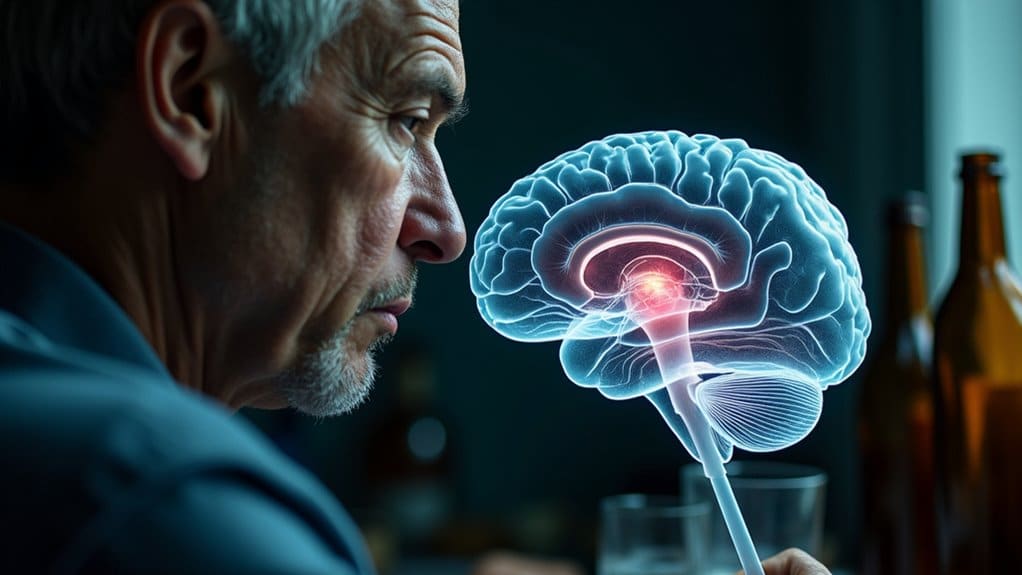
Alcohol reshapes the brain circuits that govern motivation, stress, emotion, and self-control when you drink heavily over time. Research links alcohol use disorder to lasting changes across the midbrain, limbic system, prefrontal cortex, and amygdala. These regions coordinate reward, emotional regulation, and decision-making, so when they’re altered, your ability to control drinking weakens. The prefrontal cortex, which supports judgment and impulse control, becomes less effective, while stress and craving circuits grow more reactive. That’s why loss of control ties to altered brain circuits rather than to weak willpower alone. The NIAAA reports that current science shows AUD can cause lasting changes in the brain. These neurobiological findings are a major reason clinicians describe AUD as a chronic, relapsing brain disease.
Why genetics and environment both play a role
Genetics and environment both play a role because brain changes emerge from a mix of who you are biologically and what surrounds you. Your risk of developing alcohol use disorder isn’t shaped by personal choice alone. Instead, biological, psychological, and social factors interact, each contributing to how vulnerable you are.
| Factor Type | Examples | Influence on AUD Risk |
|---|---|---|
| Genetic | Inherited traits, family history | Alters brain circuit sensitivity |
| Environmental | Stress, peer exposure, access | Shapes drinking patterns |
| Psychological | Anxiety, coping style | Reinforces continued use |
You might inherit traits that affect motivation, stress, and self-control circuits, but your environment determines whether those tendencies take hold. When genetics and environment combine, they help explain why some people progress toward this chronic, treatable medical condition while others don’t.
What the main criticisms of the disease model are

The main criticisms of the disease model center on several concerns. Some critics argue that framing alcohol use disorder as a brain disease overstates the science, since neurobiological changes don’t fully explain why many people recover without treatment. You’ll find researchers who point to spontaneous remission as evidence that AUD isn’t strictly chronic or relapsing for everyone. Others worry the disease label removes personal agency, potentially discouraging the behavioral change that recovery often requires. There’s also concern that emphasizing biology downplays social, economic, and environmental drivers that shape drinking. Critics note the diagnostic criteria capture a spectrum, so treating mild and severe cases as one “disease” may oversimplify. These arguments don’t reject treatment, but they question how you interpret the model’s claims.
Why the classification matters for treatment and stigma
The classification you apply to AUD carries real consequences for how it gets treated and how people who have it are perceived. When you frame alcoholism as a medical condition, you justify screening, diagnosis, medication, counseling, and recovery support, the same pathways you’d expect for any chronic disorder. The medical framing also acknowledges that biological, psychological, and social factors shape risk, not personal choice alone.
That framing matters for stigma, too. If you treat AUD as a moral failing, you discourage people from seeking help. If you treat it as a treatable health condition, you lower barriers to care. The strongest science supports the latter: AUD responds to treatment, and how you classify it influences whether people actually get it.
How Élevé Wellness treats alcohol use disorder
Élevé Wellness treats AUD across all three of its dimensions, because it is a chronic medical disorder with brain-based, behavioral, and physical components. You start with a clinical assessment that maps your symptoms against DSM-5 criteria and determines severity. If you show tolerance or withdrawal, you receive medically supervised detoxification to stabilize your physical health first.
From there, you address the brain-based components. Medication can reduce craving and support the circuits governing motivation and self-control. Counseling targets the behavioral patterns, drinking more than intended, failed attempts to cut down, and use despite harm.
Because AUD often relapses, you don’t stop at stabilization. You get ongoing management, relapse-prevention planning, and recovery support that treats your condition like the chronic medical disorder the science shows it to be.
Get Support for Alcohol Use Disorder Recovery
Alcohol use disorder is a treatable medical condition, not a lack of willpower. If alcohol is affecting your health, relationships, or daily life, Élevé Wellness provides evidence-based treatment, medically supervised detox, therapy, and recovery support to help you move forward. Call (833) 902-7098 or verify your insurance today to explore your treatment options.
Frequently Asked Questions
Can Alcohol Use Disorder Be Fully Cured or Only Managed?
AUD is a treatable medical condition that may involve relapse for some people, but many achieve long-term recovery with the right support. Treatment options like medication, counseling, and recovery planning can help reduce cravings, manage symptoms, and improve quality of life over time.
How Long Does Alcohol Withdrawal Typically Last?
Alcohol withdrawal typically lasts about a week, though the timeline varies by severity. You’ll often notice symptoms beginning within 6 to 12 hours after your last drink, peaking around 24 to 72 hours. Most acute symptoms ease within 5 to 7 days. However, you might experience lingering effects like anxiety, insomnia, and craving for weeks or months. Because withdrawal can turn dangerous, you shouldn’t attempt it without medical supervision.
Are There Medications Approved to Treat Alcohol Use Disorder?
Yes, medications are approved to treat AUD, and they’re part of evidence-based care. You’ll typically encounter these as one component of treatment, often paired with counseling and recovery support. Because AUD involves brain-based changes affecting craving and control, medication can help you manage symptoms and reduce relapse risk. Since AUD follows a chronic, relapsing course, you’ll benefit most when you combine medication with ongoing management, much like other chronic conditions.
How Much Drinking Is Considered Risky or Unhealthy?
You’re drinking at risky levels when your intake regularly exceeds recommended limits or produces impairment. The knowledge provided here doesn’t specify exact quantities defining risky or unhealthy drinking. Clinically, what matters most isn’t just how often you drink, but whether you’re meeting AUD criteria drinking more than intended, craving, tolerance, withdrawal, or continued use despite harm. If you’re noticing these patterns, you’ve likely crossed into clinically significant, unhealthy territory warranting evaluation.
Can Someone Recover From AUD Without Professional Treatment?
Yes, some people do recover from AUD without formal treatment, but you shouldn’t assume it’s easy or guaranteed. Because AUD often follows a chronic, relapsing course driven by craving, tolerance, and withdrawal, stopping can be difficult on your own. If you’ve experienced clinically significant impairment, professional support screening, medication, and counseling improves your odds. AUD is treatable, and combining self-directed effort with evidence-based care gives you the strongest chance at lasting recovery.